 Public transport has also been free to all since yesterday and will continue (perhaps) for a few days. Of course, most Parisians have monthly or yearly transport card (Pass Navigo) meaning the this measure probably only affects tourists or those who usually drive to work. The velib (bike rental system in Paris, see another entry in this blog) also is free
All these measures should apparently lower the pollution level by 6 percent, which does not sound a lot to me. But still I am impressed (despite criticisms saying that the authority did not react early enough) that there are even measures to be put in place in this kind of situation...many Asian cities could use the same !
Public transport has also been free to all since yesterday and will continue (perhaps) for a few days. Of course, most Parisians have monthly or yearly transport card (Pass Navigo) meaning the this measure probably only affects tourists or those who usually drive to work. The velib (bike rental system in Paris, see another entry in this blog) also is free
All these measures should apparently lower the pollution level by 6 percent, which does not sound a lot to me. But still I am impressed (despite criticisms saying that the authority did not react early enough) that there are even measures to be put in place in this kind of situation...many Asian cities could use the same !
Monday, March 23, 2015
Paris pollution
In the past couple of weeks, the temperature in Paris has yoyo-ed a lot, resulting in many people being ill. In addition, the pollution in Paris as measured by Airparif, the association that watches over pollution in the air, has reached dangerous levels. This has led to high level meetings between the Minister of Ecology (at the time of writing, it's Segolene Royal) and the mayor of Paris (Anne Hidalgo) and other actors, to decide what to do. This has resulted in alternate licence plates (depending on whether your licence plate ends in an odd or even numbers) allowed in Paris today and the next couple of days (if maintained, the pollution level seems to be decreasing to less dangerous level apparently). If your licence plate ends in an odd number today (Monday 23 march), you're probably out of luck. Exceptions are given to electric cars and cars having at least 3 people in it regardless whether it has a licence plate ending in an odd or even number. This has led people to carpooling of course, but also good business for rental companies (at least for the cars with plates allowed that day). Many also brave the rule and will probably be fined if stopped. Public transport has also been free to all since yesterday and will continue (perhaps) for a few days. Of course, most Parisians have monthly or yearly transport card (Pass Navigo) meaning the this measure probably only affects tourists or those who usually drive to work. The velib (bike rental system in Paris, see another entry in this blog) also is free
All these measures should apparently lower the pollution level by 6 percent, which does not sound a lot to me. But still I am impressed (despite criticisms saying that the authority did not react early enough) that there are even measures to be put in place in this kind of situation...many Asian cities could use the same !
Public transport has also been free to all since yesterday and will continue (perhaps) for a few days. Of course, most Parisians have monthly or yearly transport card (Pass Navigo) meaning the this measure probably only affects tourists or those who usually drive to work. The velib (bike rental system in Paris, see another entry in this blog) also is free
All these measures should apparently lower the pollution level by 6 percent, which does not sound a lot to me. But still I am impressed (despite criticisms saying that the authority did not react early enough) that there are even measures to be put in place in this kind of situation...many Asian cities could use the same !
Public transport has also been free to all since yesterday and will continue (perhaps) for a few days. Of course, most Parisians have monthly or yearly transport card (Pass Navigo) meaning the this measure probably only affects tourists or those who usually drive to work. The velib (bike rental system in Paris, see another entry in this blog) also is free
All these measures should apparently lower the pollution level by 6 percent, which does not sound a lot to me. But still I am impressed (despite criticisms saying that the authority did not react early enough) that there are even measures to be put in place in this kind of situation...many Asian cities could use the same !

Paris hospitals
I bet you'd be hard pressed to find articles on this kind of blogs about hospitals. Having spent four months in three different hospitals in Paris area, I consider myself a bit of an expert on this now.
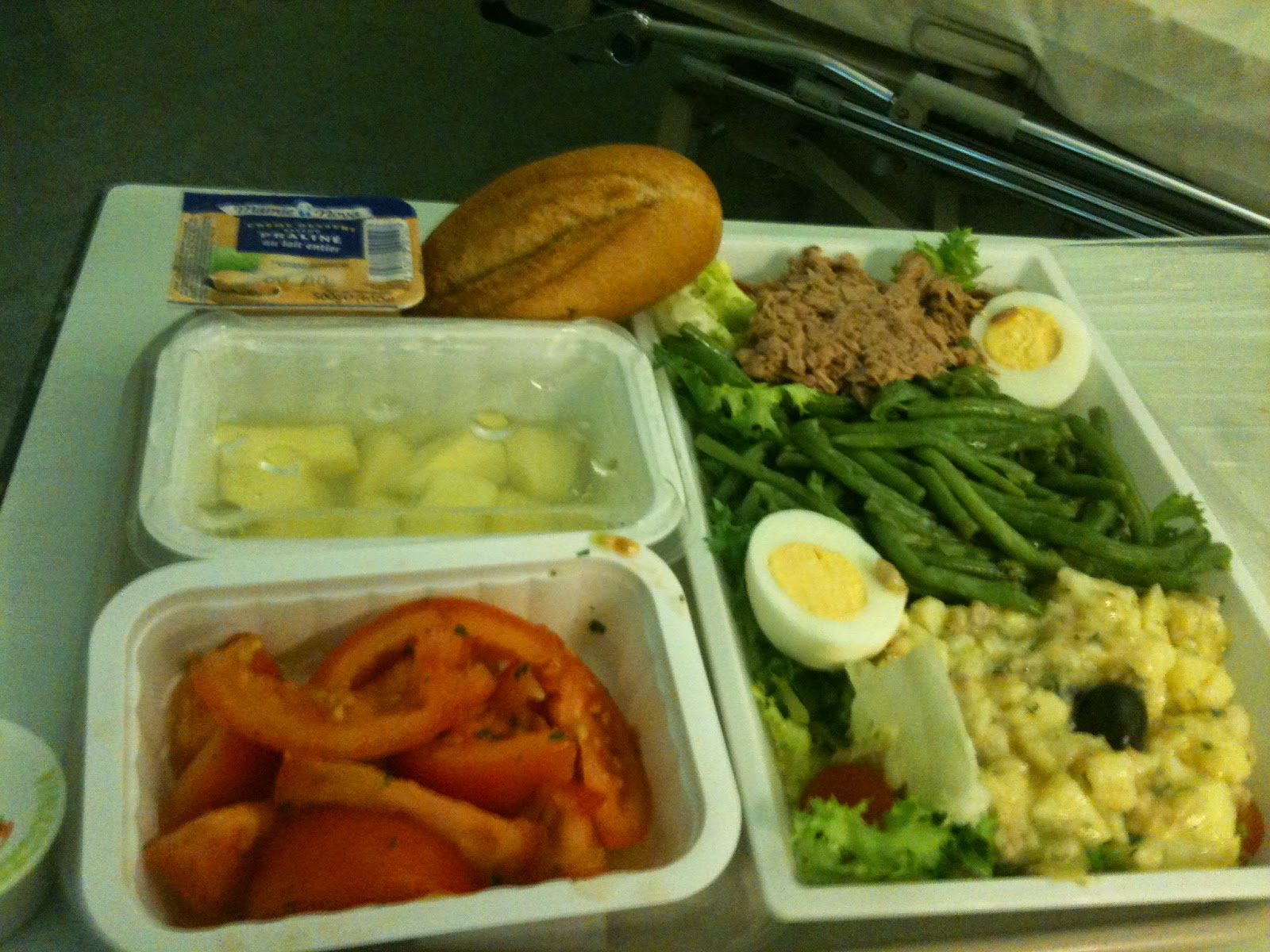
Three hospitals and three very different experience. One thing I will say about public hospitals, they are really good places to lose weight. I thought it difficult to find bad food in Paris. Boy, did I find out where bad food lurks: public hospitals. When I first stayed in a public hospital (july 2013), the nurse came and asked me what I wanted for dinner in the morning or the night before. After being read out the choices for that night (entrée or appetizer, plat principal or what we call entré in the US, and desserts and cheese), I was so impressed and was actually looking forward to dinner.
 But oh boy, when it finally arrived, my disappointment was bigger than Texas. In France, how good your food looks is as just important as how it tastes. Not in this hospital. Presentation at public hospital ? Shame, shame, shame. Styrofoam box with sorry looking meat or chicken, tired or dried out vegetable and no taste whatsoever. How could they make food so bad ? The food apparently arrives from somewhere else (I imagine an industrial site, no kidding), kept warm and arrived at hospitals by trucks to be distributed. If you were not too sick when you enter the hospital, you would probably be after the very first meal you had there. I have never been a picky eater, but that was simply inedible. I lost a lot of weights in two months (ok, probably due more to my illness, but the food served there simply did not help...I would rather go hungry than eat it). Sometime they served fruit, and I thought how could you ruin the taste of fruits ? Well, you can actually (by buying the lowest quality food ? they are for patients that need to eat and get better for goodness sake.
The last two months of hospitalisation were spent in a hospital that is an association (I guess, funded by both private and government fundings). Beautiful building (designed by a Japanese architect, see photo on the left) that has nothing to do with the public hospitals where I was (one of them had crumbling windows and floors !). Food was also prepared by chefs on site and was served on real plates with nice cutlery (see photo bottom right). There was also afternoon tea with a cake everyday. I quickly regained all the weights I lost (and even more) during my stay in this hospital. On site, there is a physiotherapy room as well as art classes that are supposedly therapeutic.
 In all hospitals you will find a psychologist, and a social assistant (to help you with administrative matters and more...never having spent time in hospitals in the US or Australia, I don't know if they have them there too).
Despite differences in hardware of public and less public hospitals, it has to be said that the staff are equally competent in all of them. The doctors in the two public hospitals are well-known and respected specialists, and the nurses are wonderful (ok, maybe some more than others). Ditto in the semi private hospital. I have come to respect enormously the work that these health care professionals do. They work in difficult conditions (not enough staff, often horrible and long hours, sometimes inadequate facilities as in public hospitals) but they soldier on.
In all hospitals you will find a psychologist, and a social assistant (to help you with administrative matters and more...never having spent time in hospitals in the US or Australia, I don't know if they have them there too).
Despite differences in hardware of public and less public hospitals, it has to be said that the staff are equally competent in all of them. The doctors in the two public hospitals are well-known and respected specialists, and the nurses are wonderful (ok, maybe some more than others). Ditto in the semi private hospital. I have come to respect enormously the work that these health care professionals do. They work in difficult conditions (not enough staff, often horrible and long hours, sometimes inadequate facilities as in public hospitals) but they soldier on.
 |
| Cognacq Jay Hospital Paris |

Sunday, March 22, 2015
French health system as experienced by me ...
In a way, I was lucky (if you could ever call getting sick Lucky) that I fell sick in Paris or in France. The health system here is nothing like the US pre Obama, where when you did not have private insurance, well just rather tough luck. The French system probably is closer to the more ‘social’ systems of Canada and Australia.
In my case, the national insurance took care of all my médical expenses. This is due to the nature of my illness, considered to be long term illness (there is a gouvernment list indicating what illnesses are considered long term or ALD = Affection Longue Durée in French), which gave me the right to a 100 percent coverage by French social security. Not as automatic as it sounds though, because your MD or the MD taking care of you in the hospital has to send documents (This is French, everything takes a lot of paper work to do) to the Social security asking for the 100 percent coverage. And then, which is logical, the coverage includes only treatments for and related to the specific illness. They also have to be renewed every number of years (at least for some maladies that can be totally treated). But this is a load of the mind of many patients (I shivered thinking how much my hospitalisation and care would have cost me in the US !). Several ALD illnesses that I know of are cancer/tumor, diabetes, tuberculosis (I thought it does not exist anymore in France, but apparently there are close to 5000 declared cases in 2012 in France !) and HIV (for those séropositive or/and taking treatments). For HIV, the price of antirétroviral médications can be upwards 1000 euros per month!
The 100 percent coverage also covers expenses at tarifs as deteremined by Social Security. When you do see a doctor, for instance, the tarifs praticed by the doctors may vary as a function of whether they follow the tarif guidelines of the social security (the cheapest) or they decide freely their tarif (more expensive). For the latter, social security reimburses the sum équivalent to their standard tarif and the rest is out of your pocket or if you have complementary private coverage they will probably reimburse the différence. You also have to, except in rare cases, see your own general practitioner designated as 'medecin traitant' (does not apply to specialists though)
 Everyone in France has a health card or Carte Vitale, with an electronic chip like you now find in most crédit and débit cards. This card contains all information about you (DOB, address as well as the médications you’re currently taking or have taken in the past etc.) which means that you probably have to protect it as you would your crédit cards. The advantage of having a 100 percent coverage when I go see my doctor is I just give him my Carte Vitale and the payment would be done directly from the social security to his account (my doctor is a he). Ditto with the médications that I pick up at the pharmacy. The déduction for each use of service is 1 euro.

Friday, March 6, 2015
Alive again
Have not written anything to post in my blog for ages. Not because I have not been writing (though I have not been writing much indeed), but just not for the blog. Many things have happened, including the most significant: a near death experience. I have for the first time got to know French hospitals...I went with the intenstion of staying just a few days to get tests done though ended up spending a good four months in three different Paris hospitals. Nearly died in one (Bichât), started to get well in another (Henri Mondor in Creteil, then back to Bichât) and really started my way back to good health again in Cognacq Jay hospital.
I learned a lot about a lot of things: Medical speaks in French, the hospital system in Paris, the health system in France (ok, becoming more familiar at least. It's such a complex system). But most of all, I have realized just how important health is. Nothing matters anymore when you do not have your health. The only thing in your mind is that you want to feel better. You want to continue and other things do not matter anymore. Really gives you a new perspective in life, though unfortunately this seems to fade with increasing health or maybe just with time. But one thing stays...Paris has become more and more my home after all that I had to live through here. I will see if this stays this way. The sick period changes my mind set of 'being in transit' in Paris (or anywhere else for that matter), to a possibiity that this is where I am likely to put down my suitcases. Not forever just yet, but I have arrived, whether at my final destination or not, certainly a destination where my suitcases would be emptied and stored for a while. I will see.
Tuesday, February 26, 2013
A cheese sandwich anyone?
The French is the master of cuisine…..from the refined food that you find in Paris restaurants, to the traditional food that you find, well, in Paris restaurants (I must admit I have not spent much time in the province…or the country side of France). The superiority that the French feel over the Brits or Americans can partly indeed be attributed to the belief that French cuisine is way better than British.  But there is one domain of food that I thought Americans do better : sandwiches. Sandwiches might have not be considered important or food in France, but in today’s world sandwiches are central to our busy life. We eat them for lunch because they are practical, fast and can even be consumed in front of the computer at the office. The French habit of taking a two hour lunch break eating at least 3 courses of lunch is becoming more rarely practiced these days. Most go out for a quick lunch and sandwiches of course are king for this kind of lunch. But French sandwiches are often so boring and unexciting. Baguettes with butter and slabs of ham (affectionately called jambon beurre) or cheeses or meat most likely. Forget about hot sandwiches. Americans, on the other hand, have been rushing through lunch for as long as I could remember, but they have also developed more interesting sandwiches that one can eat on one’s desk.
Ruebens, hot pastrami or roast beef with melting cheese, hoagies etc. are things I used to love for lunch in the US. Try to get that in Paris… though indeed in the past few years, American like sandwich shops are starting to pop up here (mostly owned by expats). Now there are a few places where you could get hot bagels with pastrami, salmon or other fillings. You could also get hot roast beef sandwiches in a few places where you could also choose the bread. Can’t wait to be able to find them anywhere in Paris… ;I am sooo sick of dry baguette with a bit of butter and slices of sorry looking cheese.
But there is one domain of food that I thought Americans do better : sandwiches. Sandwiches might have not be considered important or food in France, but in today’s world sandwiches are central to our busy life. We eat them for lunch because they are practical, fast and can even be consumed in front of the computer at the office. The French habit of taking a two hour lunch break eating at least 3 courses of lunch is becoming more rarely practiced these days. Most go out for a quick lunch and sandwiches of course are king for this kind of lunch. But French sandwiches are often so boring and unexciting. Baguettes with butter and slabs of ham (affectionately called jambon beurre) or cheeses or meat most likely. Forget about hot sandwiches. Americans, on the other hand, have been rushing through lunch for as long as I could remember, but they have also developed more interesting sandwiches that one can eat on one’s desk.
Ruebens, hot pastrami or roast beef with melting cheese, hoagies etc. are things I used to love for lunch in the US. Try to get that in Paris… though indeed in the past few years, American like sandwich shops are starting to pop up here (mostly owned by expats). Now there are a few places where you could get hot bagels with pastrami, salmon or other fillings. You could also get hot roast beef sandwiches in a few places where you could also choose the bread. Can’t wait to be able to find them anywhere in Paris… ;I am sooo sick of dry baguette with a bit of butter and slices of sorry looking cheese.
 But there is one domain of food that I thought Americans do better : sandwiches. Sandwiches might have not be considered important or food in France, but in today’s world sandwiches are central to our busy life. We eat them for lunch because they are practical, fast and can even be consumed in front of the computer at the office. The French habit of taking a two hour lunch break eating at least 3 courses of lunch is becoming more rarely practiced these days. Most go out for a quick lunch and sandwiches of course are king for this kind of lunch. But French sandwiches are often so boring and unexciting. Baguettes with butter and slabs of ham (affectionately called jambon beurre) or cheeses or meat most likely. Forget about hot sandwiches. Americans, on the other hand, have been rushing through lunch for as long as I could remember, but they have also developed more interesting sandwiches that one can eat on one’s desk.
Ruebens, hot pastrami or roast beef with melting cheese, hoagies etc. are things I used to love for lunch in the US. Try to get that in Paris… though indeed in the past few years, American like sandwich shops are starting to pop up here (mostly owned by expats). Now there are a few places where you could get hot bagels with pastrami, salmon or other fillings. You could also get hot roast beef sandwiches in a few places where you could also choose the bread. Can’t wait to be able to find them anywhere in Paris… ;I am sooo sick of dry baguette with a bit of butter and slices of sorry looking cheese.
But there is one domain of food that I thought Americans do better : sandwiches. Sandwiches might have not be considered important or food in France, but in today’s world sandwiches are central to our busy life. We eat them for lunch because they are practical, fast and can even be consumed in front of the computer at the office. The French habit of taking a two hour lunch break eating at least 3 courses of lunch is becoming more rarely practiced these days. Most go out for a quick lunch and sandwiches of course are king for this kind of lunch. But French sandwiches are often so boring and unexciting. Baguettes with butter and slabs of ham (affectionately called jambon beurre) or cheeses or meat most likely. Forget about hot sandwiches. Americans, on the other hand, have been rushing through lunch for as long as I could remember, but they have also developed more interesting sandwiches that one can eat on one’s desk.
Ruebens, hot pastrami or roast beef with melting cheese, hoagies etc. are things I used to love for lunch in the US. Try to get that in Paris… though indeed in the past few years, American like sandwich shops are starting to pop up here (mostly owned by expats). Now there are a few places where you could get hot bagels with pastrami, salmon or other fillings. You could also get hot roast beef sandwiches in a few places where you could also choose the bread. Can’t wait to be able to find them anywhere in Paris… ;I am sooo sick of dry baguette with a bit of butter and slices of sorry looking cheese.
Gay marriage in France, finally!
 |
| The minister of Justice Christiane Taubira |
Saturday, February 23, 2013
Paris départ: Soweto Johannesburg
 When I was visiting Johannesburg, I received plenty of warnings from South Africans in the hôtel to not go out walk alone, hail a taxi in the streets or go to certain areas. Ok, the last one is probably useful, but the other warnings I felt were exaggerated and a bit paranoid on the part of these well-meaning people.
So, one evening I took the train (Gautrain) to go to another suburb, granted the suburb where I was and the one I was going to were considered rich and safe. But I did walk the streets at night among the masses (that curiously almost exclusively Blacks, the Whites were in cars zipping quickly pass) and not once did I get murdered, robbed or attacked.
One area I wanted to visit was Soweto. The image of Soweto as poor is probably what most of us have. That’s true and not true. Soweto is huge and like many places in South Africa, présents a huge discrepancy between rich and poor. You will be surprised to discover the rich Soweto (or the Beverly Hills area of Soweto).
When I was visiting Johannesburg, I received plenty of warnings from South Africans in the hôtel to not go out walk alone, hail a taxi in the streets or go to certain areas. Ok, the last one is probably useful, but the other warnings I felt were exaggerated and a bit paranoid on the part of these well-meaning people.
So, one evening I took the train (Gautrain) to go to another suburb, granted the suburb where I was and the one I was going to were considered rich and safe. But I did walk the streets at night among the masses (that curiously almost exclusively Blacks, the Whites were in cars zipping quickly pass) and not once did I get murdered, robbed or attacked.
One area I wanted to visit was Soweto. The image of Soweto as poor is probably what most of us have. That’s true and not true. Soweto is huge and like many places in South Africa, présents a huge discrepancy between rich and poor. You will be surprised to discover the rich Soweto (or the Beverly Hills area of Soweto).  Beautiful houses that would be considered rich even in Los Angeles line some streets. What’s more surprising, these houses did not have fences and electronic protection like what we find in rich suburbs in Johannesburg. Yet, not very far from there, we also find very poor living areas where people live in cardboard boxes.
 Soweto I found out was not some Zulu name, but actually short for South Western Township, created when Blacks were forced to move from their houses in Johannesburg during Apartheid. Today, Soweto pulls the tourists visiting Johannesburg with its muséums, including the Mandela house and Hector Pieterson museum. It is probably the only town that has produced two Nobel Prize winners who both lived in the same street !
Friday, February 22, 2013
Flying the A380 to Johannesburg: trip report
 |
| A380 of AirFrance |

 Air France, flight AF 990
Paris CDG to Johannesburg OR Tambo JNB
Flying time: 9 hours 50 minutes
Equipment: A380 (JG)
Seat: 27C (aisle, last row of the first cabin of Economy)
This was going to be a quick work trip to Johannesburg from Paris. Tickets were bought just a couple of days before departure so were rather expensive.
On the day of departure, I checked in on the web. Unfortunately, no aisle seat was left on the upper deck. AF has a few rows of Y seats on the upper deck and represents probably my only chance of sitting in the upper deck (the others only put business there). So, I settled for 27C in the main deck.
At CDG 2E, the bagage drop off line was so long and I spent about 30 minutes waiting before I was able to drop my small suitcase. The common check in means we are checking in with pax going to Mexico City, to China (forgot which city) etc. So, lots of people. The AF agent who checked people before entering the check in area could have been more friendly, more efficient, and more proactive I thought.
Used the automated passport control so was quick for me, but the line for regular passport control was huge! Since the flight departs from gates L, this meant that we had to take the train or the bus to these gates which took quite a bit of time on the bus. Arriving at the L gates, we went through security and entered the beautiful terminal (nice architecture, nice shops…and surprise, there is even a smoking lounge. Well, lounge is a bit of a misnomer…it’s a very small glass enclosed box. But at least it’s there for the smokers before a long flight). This terminal really is nice and spacious. You could buy water here too (After I had to give up my bottle of water at security).
Boarding started a bit later than indicated but went fairly quickly (I was worried as I have noticed that there are lots of delays with this flight on flight tracker). Was seated in my seat at 23h05. At first, the seats felt OK, but all those stories I heard about them being uncomfortable turned out to be true. True there was sufficient space for your legs, but I found that it was very difficult to find a comfortable position after a while and thus only slept for an hour or two during the flight (That said, my seat mates slept at least for 8 hours straight!). The footrest was not helping either as it was bare metal and you feet slip off easily.
The crew for tonight’s flight was professional. There was a pax in my area who boarded late with huge bags that were so heavy. Though the crew pointed out spaces available they did not help the pax put the bag up (this is AF regulation?).
Finally boarding was completed. The plane was fully packed (same on the return flight with only a few seats open).
Captain got on the speaker at 23h23 and announced a flying time of 9 hours 50 minutes which is expected to be fairly smooth all the way except for minor turbulences when we cross the equator, after welcoming us on board. We pushed back at 23h35and started the long journey for take off. Take off roll was 45 seconds. As usual, the take off was very quiet and you barely know that the plane has lifted off.
After the seatbelt sign was turned off, menu was distributed by the crew, followed by headphone. AF does not turn on their PTV until pushback (unlike EK), and then it was only the tail camera available(you cannot access other contents). Once on air, PTV was functioning fully.
Dinner was then served. So, this was a pretty late dinner and I was very hungry. The food was ok, though the bread was not warmed (I thought AF would do that. EK does or did).
During the night, crew walked around with drinks for pax who did not sleep.
Before landing, breakfast was served.
Air France, flight AF 990
Paris CDG to Johannesburg OR Tambo JNB
Flying time: 9 hours 50 minutes
Equipment: A380 (JG)
Seat: 27C (aisle, last row of the first cabin of Economy)
This was going to be a quick work trip to Johannesburg from Paris. Tickets were bought just a couple of days before departure so were rather expensive.
On the day of departure, I checked in on the web. Unfortunately, no aisle seat was left on the upper deck. AF has a few rows of Y seats on the upper deck and represents probably my only chance of sitting in the upper deck (the others only put business there). So, I settled for 27C in the main deck.
At CDG 2E, the bagage drop off line was so long and I spent about 30 minutes waiting before I was able to drop my small suitcase. The common check in means we are checking in with pax going to Mexico City, to China (forgot which city) etc. So, lots of people. The AF agent who checked people before entering the check in area could have been more friendly, more efficient, and more proactive I thought.
Used the automated passport control so was quick for me, but the line for regular passport control was huge! Since the flight departs from gates L, this meant that we had to take the train or the bus to these gates which took quite a bit of time on the bus. Arriving at the L gates, we went through security and entered the beautiful terminal (nice architecture, nice shops…and surprise, there is even a smoking lounge. Well, lounge is a bit of a misnomer…it’s a very small glass enclosed box. But at least it’s there for the smokers before a long flight). This terminal really is nice and spacious. You could buy water here too (After I had to give up my bottle of water at security).
Boarding started a bit later than indicated but went fairly quickly (I was worried as I have noticed that there are lots of delays with this flight on flight tracker). Was seated in my seat at 23h05. At first, the seats felt OK, but all those stories I heard about them being uncomfortable turned out to be true. True there was sufficient space for your legs, but I found that it was very difficult to find a comfortable position after a while and thus only slept for an hour or two during the flight (That said, my seat mates slept at least for 8 hours straight!). The footrest was not helping either as it was bare metal and you feet slip off easily.
The crew for tonight’s flight was professional. There was a pax in my area who boarded late with huge bags that were so heavy. Though the crew pointed out spaces available they did not help the pax put the bag up (this is AF regulation?).
Finally boarding was completed. The plane was fully packed (same on the return flight with only a few seats open).
Captain got on the speaker at 23h23 and announced a flying time of 9 hours 50 minutes which is expected to be fairly smooth all the way except for minor turbulences when we cross the equator, after welcoming us on board. We pushed back at 23h35and started the long journey for take off. Take off roll was 45 seconds. As usual, the take off was very quiet and you barely know that the plane has lifted off.
After the seatbelt sign was turned off, menu was distributed by the crew, followed by headphone. AF does not turn on their PTV until pushback (unlike EK), and then it was only the tail camera available(you cannot access other contents). Once on air, PTV was functioning fully.
Dinner was then served. So, this was a pretty late dinner and I was very hungry. The food was ok, though the bread was not warmed (I thought AF would do that. EK does or did).
During the night, crew walked around with drinks for pax who did not sleep.
Before landing, breakfast was served.
 We landed at JNB on time and made our way to gate. It was a long walk from the gate to passport control. JNB is huge. Parked around the tarmac were South African planes, obviously, but also Lufthansa A380, BA 747 etc. Passport control was quick, despite the long lines (separated in SA or foreign passports). SA used to require two blank pages in your passport for visa…now, they only put a small sticker and mine was stuck in a page already stamped with other visa (Immigration officer was very efficient). In baggage claim, my bag came out pretty quickly and I went out of the custom area. I had to exchange money first and this took forever. I don’t know why they have to make copies of passport, fill out form make photo copies etc etc for every client. I only exchanged 50 euros but it took a good half hour to do it.
All in all, it was a pleasant flight. The seat in Y was not comfortable though. I have flown EK A380 and always managed to sleep and able to find a comfortable position (yet I think the Y seats in both airlines are pitched at 32 inches….so, don’t know what the difference is).
We landed at JNB on time and made our way to gate. It was a long walk from the gate to passport control. JNB is huge. Parked around the tarmac were South African planes, obviously, but also Lufthansa A380, BA 747 etc. Passport control was quick, despite the long lines (separated in SA or foreign passports). SA used to require two blank pages in your passport for visa…now, they only put a small sticker and mine was stuck in a page already stamped with other visa (Immigration officer was very efficient). In baggage claim, my bag came out pretty quickly and I went out of the custom area. I had to exchange money first and this took forever. I don’t know why they have to make copies of passport, fill out form make photo copies etc etc for every client. I only exchanged 50 euros but it took a good half hour to do it.
All in all, it was a pleasant flight. The seat in Y was not comfortable though. I have flown EK A380 and always managed to sleep and able to find a comfortable position (yet I think the Y seats in both airlines are pitched at 32 inches….so, don’t know what the difference is).
Paris départ: Pretoria
So, unexpectedly I got this job offer in Pretoria, South Africa. My Parisian friends were happy, they would want to come visit me on vacation if I did decide to move. My Australian and British friends were less enamored….Pretoria ? Are you mad ? This because they have very strong idea that there is nothing but crime in any South African city. I thought that too, until I went and visited Pretoria and Johannesburg myself.  First, I had to spend more than 10 hours on an A380 to reach Johannesburg from Paris. Arrived at Tambo airport, I was impressed by the size of the airport and the variety of airlines companies that serve JNB. The immigration was rapid and painless (contrary to what people tell me that everything is slower in Africa including South Africa). But wait, even though I made it out in 10 minutes to the public part of the airport, I was probably too quick in saying things are very speedy in South Africa. I had to change money. This took forever as you had to stay in line that barely moved, and then, for mysterious reasons, there are complicated paperwork involved in changing just 50 euros ! First I had to complete a form of which the agent made copies for me and to keep. Next, my passport had to be photocopied. Next they had to go somewhere to get the cash in Rand for my measly 50 euros. All in all, about half hour for the transaction. But I walked out of there richer with Rand.
Next the drive to Pretoria which was speedy since it was past rush hours (apparently trafic is horrible during rush hours). You may be thinking you’re in Los Angeles than in Johannesburg SA. Stretches of freeways cutting hills that are somewhat dry (it was end of winter), but all very modern and California looking. Half hour later I arrived in Pretoria. This is where I noticed that I was perhaps not in Los Angeles. Streets with trees that look tranquil (the streets, not the trees), but you don’t get to see the houses as many had tall cément fences with electronic protection. My BB was a beautiful grand house with a front yard that I associate with rich English homes. But you’d never know it from the street. To enter, I had to activate an electrical button that came with my keys to open the electronic gate. And when you sit in the front garden, you cannot see the street because of the fences. This gives you a feeling of being separated from the others somewhat, no connection to the outside world like.
I wanted to go downtown that evening, but the south africans I met scared me enough to make me abandon the plan (they said I would never make it back if I go to downtown by myself in the evening !). I walked instead to a mall not far from my BB. Malls seem to be the center of activities where you do your shopping, go to cafés or restaurants.
The same in Johannesburg (just an hour drive from Pretoria). Wanting to walk around, the people at the hôtel showed their horror réaction when I told them I was going to walk. They offered to call a taxi when I said I would hail a taxi on the street (which evoked again collective horror). I was beginning to suspect that these people were scaring me more than necessary. So, armed with an American friend who also knew no better, we took off from Rosebank using the ultramodern Gautrain (High speed train) to Sandton. Again, a mall with great shops, restaurant, cinémas etc. But I was becoming malled out and wanted just to walk around where there are shops and cafés etc. But that was not to be, things seem to revolve around mall where you drive to and do your things. We took the train back, crossing many many people on the streets who all seemed to be black and who gave us friendly smiles. We made it back to the hôtel in one pièce and started thinking that maybe I should listen less and just do what I want to do as long as I am being vigilant. Like I would be vigilant when I walk around in Los Angeles, San Francisco or Sydney !!
First, I had to spend more than 10 hours on an A380 to reach Johannesburg from Paris. Arrived at Tambo airport, I was impressed by the size of the airport and the variety of airlines companies that serve JNB. The immigration was rapid and painless (contrary to what people tell me that everything is slower in Africa including South Africa). But wait, even though I made it out in 10 minutes to the public part of the airport, I was probably too quick in saying things are very speedy in South Africa. I had to change money. This took forever as you had to stay in line that barely moved, and then, for mysterious reasons, there are complicated paperwork involved in changing just 50 euros ! First I had to complete a form of which the agent made copies for me and to keep. Next, my passport had to be photocopied. Next they had to go somewhere to get the cash in Rand for my measly 50 euros. All in all, about half hour for the transaction. But I walked out of there richer with Rand.
Next the drive to Pretoria which was speedy since it was past rush hours (apparently trafic is horrible during rush hours). You may be thinking you’re in Los Angeles than in Johannesburg SA. Stretches of freeways cutting hills that are somewhat dry (it was end of winter), but all very modern and California looking. Half hour later I arrived in Pretoria. This is where I noticed that I was perhaps not in Los Angeles. Streets with trees that look tranquil (the streets, not the trees), but you don’t get to see the houses as many had tall cément fences with electronic protection. My BB was a beautiful grand house with a front yard that I associate with rich English homes. But you’d never know it from the street. To enter, I had to activate an electrical button that came with my keys to open the electronic gate. And when you sit in the front garden, you cannot see the street because of the fences. This gives you a feeling of being separated from the others somewhat, no connection to the outside world like.
I wanted to go downtown that evening, but the south africans I met scared me enough to make me abandon the plan (they said I would never make it back if I go to downtown by myself in the evening !). I walked instead to a mall not far from my BB. Malls seem to be the center of activities where you do your shopping, go to cafés or restaurants.
The same in Johannesburg (just an hour drive from Pretoria). Wanting to walk around, the people at the hôtel showed their horror réaction when I told them I was going to walk. They offered to call a taxi when I said I would hail a taxi on the street (which evoked again collective horror). I was beginning to suspect that these people were scaring me more than necessary. So, armed with an American friend who also knew no better, we took off from Rosebank using the ultramodern Gautrain (High speed train) to Sandton. Again, a mall with great shops, restaurant, cinémas etc. But I was becoming malled out and wanted just to walk around where there are shops and cafés etc. But that was not to be, things seem to revolve around mall where you drive to and do your things. We took the train back, crossing many many people on the streets who all seemed to be black and who gave us friendly smiles. We made it back to the hôtel in one pièce and started thinking that maybe I should listen less and just do what I want to do as long as I am being vigilant. Like I would be vigilant when I walk around in Los Angeles, San Francisco or Sydney !!
 First, I had to spend more than 10 hours on an A380 to reach Johannesburg from Paris. Arrived at Tambo airport, I was impressed by the size of the airport and the variety of airlines companies that serve JNB. The immigration was rapid and painless (contrary to what people tell me that everything is slower in Africa including South Africa). But wait, even though I made it out in 10 minutes to the public part of the airport, I was probably too quick in saying things are very speedy in South Africa. I had to change money. This took forever as you had to stay in line that barely moved, and then, for mysterious reasons, there are complicated paperwork involved in changing just 50 euros ! First I had to complete a form of which the agent made copies for me and to keep. Next, my passport had to be photocopied. Next they had to go somewhere to get the cash in Rand for my measly 50 euros. All in all, about half hour for the transaction. But I walked out of there richer with Rand.
Next the drive to Pretoria which was speedy since it was past rush hours (apparently trafic is horrible during rush hours). You may be thinking you’re in Los Angeles than in Johannesburg SA. Stretches of freeways cutting hills that are somewhat dry (it was end of winter), but all very modern and California looking. Half hour later I arrived in Pretoria. This is where I noticed that I was perhaps not in Los Angeles. Streets with trees that look tranquil (the streets, not the trees), but you don’t get to see the houses as many had tall cément fences with electronic protection. My BB was a beautiful grand house with a front yard that I associate with rich English homes. But you’d never know it from the street. To enter, I had to activate an electrical button that came with my keys to open the electronic gate. And when you sit in the front garden, you cannot see the street because of the fences. This gives you a feeling of being separated from the others somewhat, no connection to the outside world like.
I wanted to go downtown that evening, but the south africans I met scared me enough to make me abandon the plan (they said I would never make it back if I go to downtown by myself in the evening !). I walked instead to a mall not far from my BB. Malls seem to be the center of activities where you do your shopping, go to cafés or restaurants.
The same in Johannesburg (just an hour drive from Pretoria). Wanting to walk around, the people at the hôtel showed their horror réaction when I told them I was going to walk. They offered to call a taxi when I said I would hail a taxi on the street (which evoked again collective horror). I was beginning to suspect that these people were scaring me more than necessary. So, armed with an American friend who also knew no better, we took off from Rosebank using the ultramodern Gautrain (High speed train) to Sandton. Again, a mall with great shops, restaurant, cinémas etc. But I was becoming malled out and wanted just to walk around where there are shops and cafés etc. But that was not to be, things seem to revolve around mall where you drive to and do your things. We took the train back, crossing many many people on the streets who all seemed to be black and who gave us friendly smiles. We made it back to the hôtel in one pièce and started thinking that maybe I should listen less and just do what I want to do as long as I am being vigilant. Like I would be vigilant when I walk around in Los Angeles, San Francisco or Sydney !!
First, I had to spend more than 10 hours on an A380 to reach Johannesburg from Paris. Arrived at Tambo airport, I was impressed by the size of the airport and the variety of airlines companies that serve JNB. The immigration was rapid and painless (contrary to what people tell me that everything is slower in Africa including South Africa). But wait, even though I made it out in 10 minutes to the public part of the airport, I was probably too quick in saying things are very speedy in South Africa. I had to change money. This took forever as you had to stay in line that barely moved, and then, for mysterious reasons, there are complicated paperwork involved in changing just 50 euros ! First I had to complete a form of which the agent made copies for me and to keep. Next, my passport had to be photocopied. Next they had to go somewhere to get the cash in Rand for my measly 50 euros. All in all, about half hour for the transaction. But I walked out of there richer with Rand.
Next the drive to Pretoria which was speedy since it was past rush hours (apparently trafic is horrible during rush hours). You may be thinking you’re in Los Angeles than in Johannesburg SA. Stretches of freeways cutting hills that are somewhat dry (it was end of winter), but all very modern and California looking. Half hour later I arrived in Pretoria. This is where I noticed that I was perhaps not in Los Angeles. Streets with trees that look tranquil (the streets, not the trees), but you don’t get to see the houses as many had tall cément fences with electronic protection. My BB was a beautiful grand house with a front yard that I associate with rich English homes. But you’d never know it from the street. To enter, I had to activate an electrical button that came with my keys to open the electronic gate. And when you sit in the front garden, you cannot see the street because of the fences. This gives you a feeling of being separated from the others somewhat, no connection to the outside world like.
I wanted to go downtown that evening, but the south africans I met scared me enough to make me abandon the plan (they said I would never make it back if I go to downtown by myself in the evening !). I walked instead to a mall not far from my BB. Malls seem to be the center of activities where you do your shopping, go to cafés or restaurants.
The same in Johannesburg (just an hour drive from Pretoria). Wanting to walk around, the people at the hôtel showed their horror réaction when I told them I was going to walk. They offered to call a taxi when I said I would hail a taxi on the street (which evoked again collective horror). I was beginning to suspect that these people were scaring me more than necessary. So, armed with an American friend who also knew no better, we took off from Rosebank using the ultramodern Gautrain (High speed train) to Sandton. Again, a mall with great shops, restaurant, cinémas etc. But I was becoming malled out and wanted just to walk around where there are shops and cafés etc. But that was not to be, things seem to revolve around mall where you drive to and do your things. We took the train back, crossing many many people on the streets who all seemed to be black and who gave us friendly smiles. We made it back to the hôtel in one pièce and started thinking that maybe I should listen less and just do what I want to do as long as I am being vigilant. Like I would be vigilant when I walk around in Los Angeles, San Francisco or Sydney !!
Paris or Pretoria?
Many say they envy me for living in Paris…I used to agree that living in Paris is great. But like anywhere else, once you have lived long enough in a place, you start noticing all the things that bug you and you may get itchy feet to be elsewhere. Even Pretoria.
 Recently I received a work offer from a company in Pretoria, South Africa. I actually thought about it for ages, trying to come to a very life changing décision of leaving Paris and moving there. I wanted to leave Paris because at times I was beginning to think that all the beauty that surrounds me in Paris was not worth the hardship associated with living in Paris (especially the crowd, the prices, the stress etc). It takes more and more effort to enjoy Paris, for me. But is South Africa a good destination to start a new life ? I could imagine being very happy there as much as I could imagine being unhappy. Happy with the weather. Happy with being in a country truly multicultural. Unhappy with having to live with security home system. Unhappy with the economic situation that is exemplified by the discrepancy between the rich and the poor.
One thing I noticed during my visit is that people looked happier in Pretoria and J-burg than those in Paris. Despite the fear of crime, despite the fact that many looked poor or poorer than what we see in Paris. I attribute it to Black culture, this happiness. And you know what, it’s probably Paris attitude that makes me so negative at the moment. So, back to decision making....Paris or Pretoria?
Recently I received a work offer from a company in Pretoria, South Africa. I actually thought about it for ages, trying to come to a very life changing décision of leaving Paris and moving there. I wanted to leave Paris because at times I was beginning to think that all the beauty that surrounds me in Paris was not worth the hardship associated with living in Paris (especially the crowd, the prices, the stress etc). It takes more and more effort to enjoy Paris, for me. But is South Africa a good destination to start a new life ? I could imagine being very happy there as much as I could imagine being unhappy. Happy with the weather. Happy with being in a country truly multicultural. Unhappy with having to live with security home system. Unhappy with the economic situation that is exemplified by the discrepancy between the rich and the poor.
One thing I noticed during my visit is that people looked happier in Pretoria and J-burg than those in Paris. Despite the fear of crime, despite the fact that many looked poor or poorer than what we see in Paris. I attribute it to Black culture, this happiness. And you know what, it’s probably Paris attitude that makes me so negative at the moment. So, back to decision making....Paris or Pretoria?
 Recently I received a work offer from a company in Pretoria, South Africa. I actually thought about it for ages, trying to come to a very life changing décision of leaving Paris and moving there. I wanted to leave Paris because at times I was beginning to think that all the beauty that surrounds me in Paris was not worth the hardship associated with living in Paris (especially the crowd, the prices, the stress etc). It takes more and more effort to enjoy Paris, for me. But is South Africa a good destination to start a new life ? I could imagine being very happy there as much as I could imagine being unhappy. Happy with the weather. Happy with being in a country truly multicultural. Unhappy with having to live with security home system. Unhappy with the economic situation that is exemplified by the discrepancy between the rich and the poor.
One thing I noticed during my visit is that people looked happier in Pretoria and J-burg than those in Paris. Despite the fear of crime, despite the fact that many looked poor or poorer than what we see in Paris. I attribute it to Black culture, this happiness. And you know what, it’s probably Paris attitude that makes me so negative at the moment. So, back to decision making....Paris or Pretoria?
Recently I received a work offer from a company in Pretoria, South Africa. I actually thought about it for ages, trying to come to a very life changing décision of leaving Paris and moving there. I wanted to leave Paris because at times I was beginning to think that all the beauty that surrounds me in Paris was not worth the hardship associated with living in Paris (especially the crowd, the prices, the stress etc). It takes more and more effort to enjoy Paris, for me. But is South Africa a good destination to start a new life ? I could imagine being very happy there as much as I could imagine being unhappy. Happy with the weather. Happy with being in a country truly multicultural. Unhappy with having to live with security home system. Unhappy with the economic situation that is exemplified by the discrepancy between the rich and the poor.
One thing I noticed during my visit is that people looked happier in Pretoria and J-burg than those in Paris. Despite the fear of crime, despite the fact that many looked poor or poorer than what we see in Paris. I attribute it to Black culture, this happiness. And you know what, it’s probably Paris attitude that makes me so negative at the moment. So, back to decision making....Paris or Pretoria?
Subscribe to:
Posts (Atom)
.jpg)
